Search
SEARCH WHAT YOU WANT
In advanced wound care, dressing performance starts with the selection of the right material. From absorbency and softness to flexibility, thickness and moisture management, the properties of the foam material can directly influence the performance of the finished dressing.
As wound care products become more specialized, medical manufacturers are increasingly looking beyond standard foam sheets and focusing on high-performance medical foam rolls and customized foam materials that can be converted into different dressing structures.
Medical foam roll is an important material format for manufacturers producing foam dressings in different sizes, shapes and constructions. Compared with finished dressings, jumbo rolls provide greater flexibility for downstream converting, die-cutting, lamination and customization.
A Polyurethane Foam Dressing Roll can be designed according to different requirements for thickness, density, pore structure, softness and absorbency. These characteristics make PU foam suitable for a wide range of wound care applications, including absorbent wound dressings, cushioning layers and secondary dressing components.
For manufacturers serving hospitals, nursing homes and home-care markets, customized foam rolls can also be converted into products such as Bedridden Patient Foam Dressing, Caregiver Wound Care Foam Pads, Hospital Grade Foam Dressing and Nursing Home Foam Dressing.
The performance of a foam dressing is closely related to its material structure.
An open-cell or porous foam structure can provide space for fluid absorption and transfer, while softness and flexibility help the material conform to different body contours. Thickness and density can also be adjusted according to the intended application.
For advanced wound care manufacturers, a Custom 3D Porous Jumbo Roll for Advanced Wound Care can provide a flexible material platform for developing products with specific absorption, cushioning and conformability requirements.
This approach is particularly useful when developing customized wound care products rather than relying on standardized dressing formats.
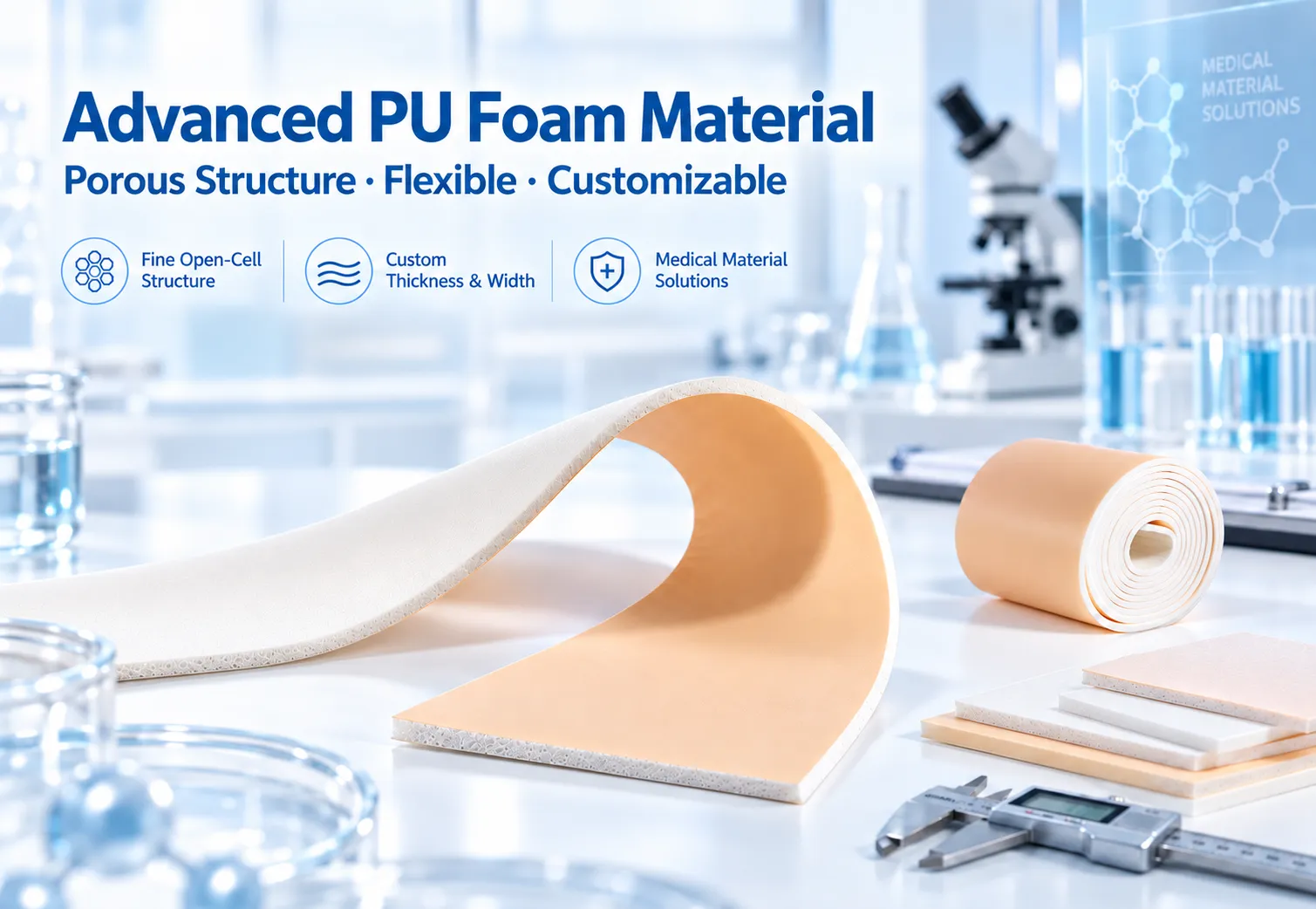
A medical foam jumbo roll can be converted into various finished dressing constructions through processes such as cutting, lamination, film application and adhesive integration.
Depending on the product design, manufacturers may use:
Medical PU Foam Jumbo Roll for absorbent foam layers
Medical PU Foam with Films Jumbo Roll for foam structures combined with waterproof or breathable film layers
PU Film Jumbo Roll for protective or backing film applications
Silicone Coated Jumbo Roll for advanced silicone-contact or silicone-coated dressing structures
These material combinations allow manufacturers to develop different types of foam dressing products for specific wound care requirements.
Exudate management remains an important consideration in modern wound dressing design. A suitable foam structure should help absorb wound fluid while maintaining appropriate contact with the wound environment.
Recent material development in advanced wound care continues to focus on improving absorption, fluid retention and wet strength. For example, Covestro introduced a new hydrophilic polyurethane foam technology in 2026 designed for wound care applications, highlighting the industry's continued focus on moisture management and high-performance polyurethane foam materials.
This trend creates opportunities for manufacturers developing Hospital Grade Foam Dressing, First Aid Foam Dressing, and other customized foam-based wound care products.
One advantage of using jumbo roll materials is the ability to customize the material before it becomes a finished dressing.
Depending on the target application, manufacturers may specify different foam thicknesses, pore structures, dimensions, film combinations, adhesive systems and coating requirements.
For example, a Factory Wholesale Medical PU Foam Jumbo Roll can serve as a basic absorbent material for customized foam dressings, while a Factory Wholesale Medical PU Foam with Films Jumbo Roll can be developed for products requiring additional moisture or environmental protection.
For specialized products, manufacturers may also consider an Antimicrobial Non-Adhesive Foam Wound Dressing Jumbo Roll, depending on the required product structure and regulatory specifications.
For wound care brands, distributors and medical product manufacturers, material customization can make it easier to develop differentiated products for different markets.
Instead of purchasing only finished standard dressings, buyers can work with a medical foam material manufacturer to develop customized jumbo rolls that match their converting processes and final product specifications.
This is particularly relevant for OEM and private label projects involving foam dressings, silicone foam dressings, PU foam dressing materials and other advanced wound care products.
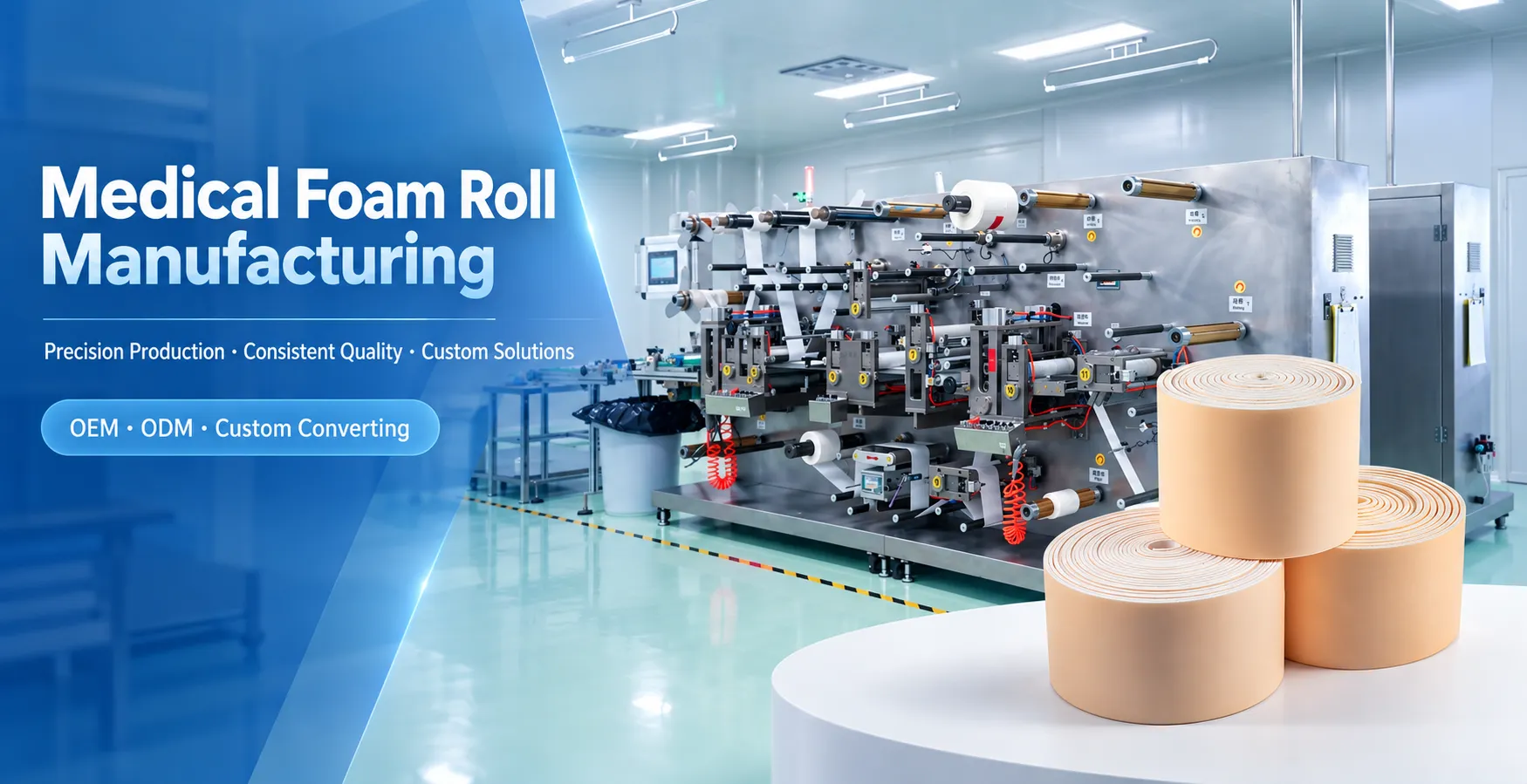
The development of advanced wound dressings increasingly depends on material engineering rather than simply changing the external shape of a dressing.
From medical foam roll and medical PU foam to film-laminated and silicone-coated structures, the right material combination can provide a flexible foundation for different wound care applications.
For manufacturers looking for PU Foam Dressing Material Manufacturer, Factory Wholesale Medical PU Foam Jumbo Roll or customized foam dressing materials, jumbo roll solutions offer greater flexibility for product development, converting and OEM production.
Email: medical@southvo.com
In advanced wound care, dressing performance starts with the selection of the right material. From absorbency and softness to flexibility, thickness and moisture management, the properties of the foam material can directly influence the performance of the finished dressing.
As wound care products become more specialized, medical manufacturers are increasingly looking beyond standard foam sheets and focusing on high-performance medical foam rolls and customized foam materials that can be converted into different dressing structures.
Medical foam roll is an important material format for manufacturers producing foam dressings in different sizes, shapes and constructions. Compared with finished dressings, jumbo rolls provide greater flexibility for downstream converting, die-cutting, lamination and customization.
A Polyurethane Foam Dressing Roll can be designed according to different requirements for thickness, density, pore structure, softness and absorbency. These characteristics make PU foam suitable for a wide range of wound care applications, including absorbent wound dressings, cushioning layers and secondary dressing components.
For manufacturers serving hospitals, nursing homes and home-care markets, customized foam rolls can also be converted into products such as Bedridden Patient Foam Dressing, Caregiver Wound Care Foam Pads, Hospital Grade Foam Dressing and Nursing Home Foam Dressing.
The performance of a foam dressing is closely related to its material structure.
An open-cell or porous foam structure can provide space for fluid absorption and transfer, while softness and flexibility help the material conform to different body contours. Thickness and density can also be adjusted according to the intended application.
For advanced wound care manufacturers, a Custom 3D Porous Jumbo Roll for Advanced Wound Care can provide a flexible material platform for developing products with specific absorption, cushioning and conformability requirements.
This approach is particularly useful when developing customized wound care products rather than relying on standardized dressing formats.
A medical foam jumbo roll can be converted into various finished dressing constructions through processes such as cutting, lamination, film application and adhesive integration.
Depending on the product design, manufacturers may use:
Medical PU Foam Jumbo Roll for absorbent foam layers
Medical PU Foam with Films Jumbo Roll for foam structures combined with waterproof or breathable film layers
PU Film Jumbo Roll for protective or backing film applications
Silicone Coated Jumbo Roll for advanced silicone-contact or silicone-coated dressing structures
These material combinations allow manufacturers to develop different types of foam dressing products for specific wound care requirements.
Exudate management remains an important consideration in modern wound dressing design. A suitable foam structure should help absorb wound fluid while maintaining appropriate contact with the wound environment.
Recent material development in advanced wound care continues to focus on improving absorption, fluid retention and wet strength. For example, Covestro introduced a new hydrophilic polyurethane foam technology in 2026 designed for wound care applications, highlighting the industry's continued focus on moisture management and high-performance polyurethane foam materials.
This trend creates opportunities for manufacturers developing Hospital Grade Foam Dressing, First Aid Foam Dressing, and other customized foam-based wound care products.
One advantage of using jumbo roll materials is the ability to customize the material before it becomes a finished dressing.
Depending on the target application, manufacturers may specify different foam thicknesses, pore structures, dimensions, film combinations, adhesive systems and coating requirements.
For example, a Factory Wholesale Medical PU Foam Jumbo Roll can serve as a basic absorbent material for customized foam dressings, while a Factory Wholesale Medical PU Foam with Films Jumbo Roll can be developed for products requiring additional moisture or environmental protection.
For specialized products, manufacturers may also consider an Antimicrobial Non-Adhesive Foam Wound Dressing Jumbo Roll, depending on the required product structure and regulatory specifications.
For wound care brands, distributors and medical product manufacturers, material customization can make it easier to develop differentiated products for different markets.
Instead of purchasing only finished standard dressings, buyers can work with a medical foam material manufacturer to develop customized jumbo rolls that match their converting processes and final product specifications.
This is particularly relevant for OEM and private label projects involving foam dressings, silicone foam dressings, PU foam dressing materials and other advanced wound care products.
The development of advanced wound dressings increasingly depends on material engineering rather than simply changing the external shape of a dressing.
From medical foam roll and medical PU foam to film-laminated and silicone-coated structures, the right material combination can provide a flexible foundation for different wound care applications.
For manufacturers looking for PU Foam Dressing Material Manufacturer, Factory Wholesale Medical PU Foam Jumbo Roll or customized foam dressing materials, jumbo roll solutions offer greater flexibility for product development, converting and OEM production.
Email: medical@southvo.com
Search
Category
Recent Posts